Google Is Flexing Its Biggest Advantage Over OpenAI — Enter Gemini 3 ?

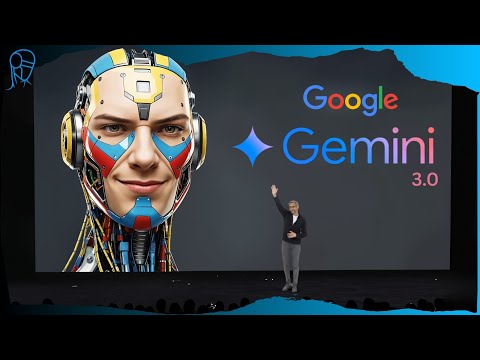
In the rapidly evolving world of artificial intelligence, Google just dropped a major bombshell: Gemini 3, its most advanced AI model yet. And make no mistake — this is more than just an incremental update. With Gemini 3, Google is not just competing with OpenAI — it’s laying down a bold challenge, leveraging its unparalleled infrastructure, product ecosystem, and full-stack control. Here’s a deep dive into why Gemini 3 could shift the balance of power in the AI race.
What Is Gemini 3? (The Big Picture)
Google describes Gemini 3 as its “most intelligent model”, built to bring ideas to life with deeply nuanced reasoning, multimodal understanding, and powerful agentic (self-driven) capabilities.
Key highlights:
- Benchmarks & Performance: On rigorous AI benchmarks, Gemini 3 Pro significantly outperforms its predecessor, Gemini 2.5 Pro.
- Deep Think Mode: A special “Deep Think” variant that pushes reasoning even further — better for really complex problems.
- Multimodal Mastery: It’s not just about text. Gemini 3 handles text, images, video, audio, and even code.
- Huge Context Window: It supports a large context (1 million-token context window), meaning it can process very long documents or conversations in one go.
- Safety Focus: Google claims improved security, reduced “sycophancy” (flattery), better resistance to prompt injections, and stronger abuse protection.
How Gemini 3 Is Integrated — Not an Afterthought
One of the biggest strategic moves by Google: Gemini 3 is built into Google Search from day one. Yes, you read that right. Rather than being a separate chatbot or app (only), it’s integrated into the core Google Search experience via an “AI Mode.
This is a masterstroke because:
Massive Reach: Search is used by billions. By embedding Gemini into Search, Google can instantly expose this advanced AI to a gargantuan audience.
Seamless Experience: Users don’t have to jump between apps. Their queries, deep research, planning — everything gets a reasoning boost.
Interactive Responses: With Gemini 3 in Search, Google can deliver dynamic visual layouts, simulations, and generative UI tailored to your question.
The Developer Power: Agentic Coding & Antigravity
Google isn’t just aiming Gemini 3 at end-users — developers are a core target too.
- Antigravity Platform: Google has launched Google Antigravity, an “agent-first” IDE (Integrated Development Environment) that uses Gemini 3 Pro.
- In this setup, AI agents don’t just autocomplete code; they plan, execute, and verify tasks autonomously.
- These agents can access the editor, terminal, and browser — meaning more powerful, real-world workflows can be automated.
- The agents generate “artifacts” (task lists, screenshots, browser recordings) — so you can verify what they did, maintaining transparency.
- For spatial and multimodal reasoning (robotics, XR, mapping), Gemini 3’s spatial understanding is significantly improved.
Use Cases That Matter: Learning, Planning & Building
Gemini 3 is not just “smarter,” but more practical in everyday and advanced scenarios:
1.Learning & Education
- It can process academic papers, video lectures, and handwritten notes — and turn them into visual flashcards, summaries, or even interactive simulations. blog.google
- For students or lifelong learners, it’s like having an AI tutor that understands different formats.
2.Planning & Productivity
- Thanks to its agentic capabilities, Gemini 3 can plan complex multi-step workflows: booking services, managing your calendar, planning trips, or coordinating tasks. blog.google
- In the Gemini app, “Gemini Agent” (for Ultra users) can already help with inbox organization, trip planning, and more. blog.google
3.Creative & Technical Building
- Developers can create web apps, 3D voxel art, or even retro games with “vibe coding” — Gemini 3 generates code, visualizations, and interactive UIs. blog.google
- For robotics, autonomous vehicles, or spatial applications, its spatial reasoning helps with trajectory prediction and dynamic tasks.
Why This Is a Big Deal for OpenAI — Google’s Strategic Edge
Here’s why Gemini 3 could be a serious threat to OpenAI (and why Google might be “flexing” its biggest advantage):
Full-Stack Ownership
- Google controls everything: research, models, infrastructure (TPUs), distribution, and products.
- Unlike OpenAI, which must partner for some resources or rely on third parties, Google has tight vertical integration.
Instant Massive Distribution
- Embedding Gemini 3 into Search gives Google access to its biggest moat: user traffic. Search is not just a feature; it’s the gateway that billions of people use daily.
- This means Gemini isn’t limited to “AI users” — it’s accessible to the general population via Google’s existing platform.
Monetization Leverage
- Because of its reach, Google can monetize Gemini 3 in more creative ways: ads, enterprise integrations (Vertex AI), premium users (AI Ultra), and more.
- For OpenAI, matching this reach means relying heavily on partnerships (Microsoft, others) or building a user base from scratch — harder to just “plug in.”
Developer Ecosystem Advantage
- With Antigravity, Google is not just offering code completion; it’s offering agentic development, where AI agents themselves execute software workflows.
- That could dramatically improve developer productivity and change how software is built, giving Google a big lead.
Risks, Challenges & What Could Go Wrong
Even with all this power, Gemini 3 isn’t bulletproof. Here are some potential pitfalls or challenges:
Safety Concerns: The “Deep Think” mode is powerful, but powerful models bring risk. Google claims to have done safety evaluations, but any misuse or bug could be problematic.
Cost & Compute: Running such a large, reasoning-intensive model with multimodal capabilities could be expensive. How Google prices this (for enterprise / API) will matter.
User Adoption: Integration into Search is brilliant, but users must learn to trust AI-generated insights over traditional search results.
Competition Response: OpenAI, Anthropic, and other AI companies will not sit idle — they’ll respond with better models or integrations.
Regulatory Risks: Given global regulation around AI (safety, data, privacy), Google needs to carefully navigate compliance
Why This Could Be a Turning Point in the AI Race
Putting it all together: Gemini 3 is not just another AI model — it’s a strategic lever for Google to turn its existing dominance (Search, cloud, developer tools) into a next-gen AI advantage. Here’s why this moment matters:
Democratization: More users (even non-AI techies) get access to powerful reasoning via familiar Google apps.
Developer Revolution: With agentic coding, Google could redefine how software is built — making AI a collaborative partner, not just a tool.
Business Impact: Enterprises can leverage Gemini 3 for complex planning, automation, and decision-making.
AI Leadership: If Google scales Gemini 3 effectively, it can challenge the narrative that OpenAI is the undisputed front-runner in “most advanced AI.”

Final Verdict ?
Google’s Gemini 3 is more than hype — it’s a bold, multi-pronged play. By combining:
State-of-the-art reasoning,
Deep multimodal understanding,
Agentic, autonomous workflows,
Tight integration into core Google products, and
A full-stack infrastructure,
Google is flexing in a way that’s hard to replicate. For OpenAI, the bar just got higher.
If you’re someone who cares about the future of AI — whether as a developer, a business leader, or just a curious user — Gemini 3 is a model to watch closely.